(1) Novel photoinitiators for polymerization of monomers.
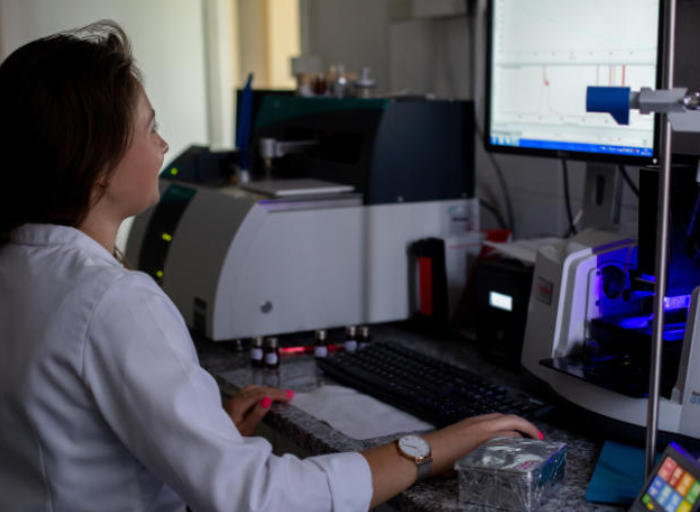
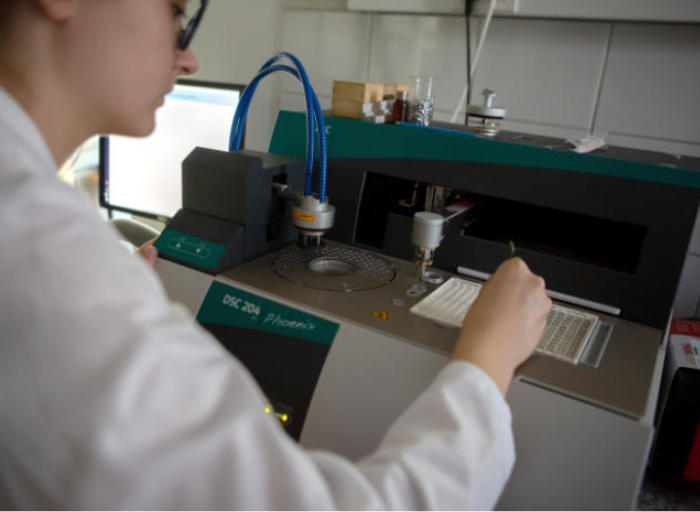
Synthesis of new photoinitiators for cationic polymerisation processes and study of their effectiveness and efficiency in photo-polymerisation of coating materials by Fluorescence Probe Technology (FPT), Real-Time FT-IR (RT-FTIR) and Photo Differential Scanning Calorimetry (p-DSC).
(2) New accelerators for polymerization and photopolymerization processes.
Synthesis of new accelerators for polymerisation and photopolymerisation processes (e.g., ring-opening polymerisation and unique polymerisation processes; free-radical photo-polymerisation of multifunctional monomers, the photo-polymerisation of a mixture of multifunctional monomers or oligomers that polymerise by different mechanisms leads to the build-up of two interpenetrating polymer networks (IPN).
(3) 3D printing processes (3D SLA, 3D-DLP, 2PP 3D printing).
3D-VAT printing processes and materials for additive manufacturing (AM)/rapid prototyping/solid free-form fabrication processes (e.g., 3D printing processes for photocurable polymeric materials: technologies, materials, and machines. A fundamental understanding of the interplay between light and matter in photo-initiating systems guides 3D printing.
(4) Fluorescent probes for special applications – studying the properties of investigated media.
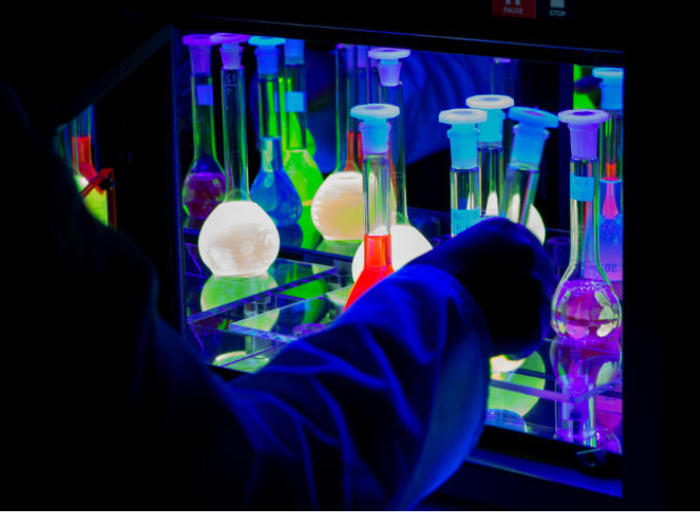
(5) Application of fluorescent probes in monitoring the progress of chemical reactions, including polymerization and photopolymerization processes (e.g., photocured layers).
Synthesis of fluorescent compounds for the role of fluorescent probes for special applications – studying the properties of investigated media (e.g., cationic photopolymerisation and the application of Fluorescence Probe Technology for monitoring the progress of cationic photopolymerisation processes).
(6) Intelligent luminescent molecular sensors for selective detection in biochemistry and chemistry.
🚀World’s TOP 2% Scientists 🌍👩🔬
✨ Every important event must have its own graphics and be beautifully immortalized! ✨
Faculty of Chemical Engineering and Technology, Krakow University of Technology Tadeusz Kościuszko University of Technology
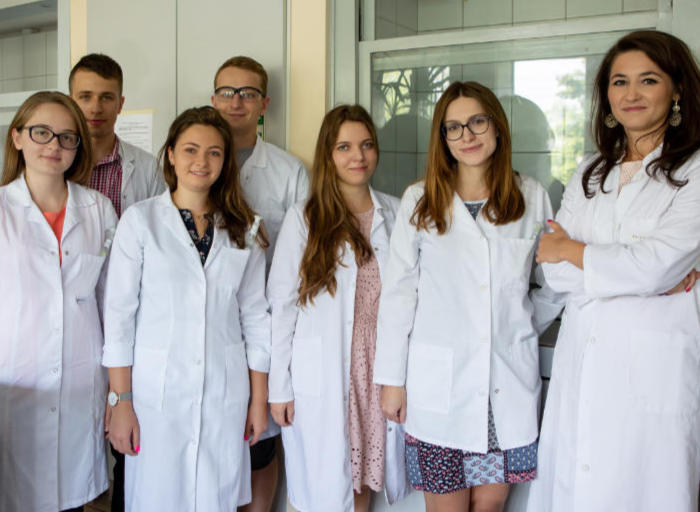
It is with great joy and pride that we share the news that our professor and supervisor of the Ortyl Photo Lab group, JOANNA ORTYL, has been included...
We got it! 🎉📣
Our paper "High-Performance Thiadiazole Derivatives as a Nontoxic..." https://pubs.acs.org/doi/10.1021/acs.iecr.5c02434 was awarded and made it to the cover of the journal Industrial & Engineering Chemistry Research (ACS Publications)! 🧪📖✨
This is a great honor for us and motivation for further research. 💡🔬
Congratulations to the co-authors of this exaggeration : Patryc...
😎👉Last week we had the opportunity to participate in the conference International Workshop on Functional Nanostructured Materials - "FuNaM-5" - at the Jagiellonian University 🎓✨
The conference was attended by both students and PhD students from OrtylPhotoLab🙂
Faculty of Chemical Engineering and Technology at the Tadeusz Kosciuszko University of Technology in Krakow
It was an amazing meetin...
Today we had the pleasure of taking part in a series of popular science events #nauka4future organized by FutureLab PK Faculty of Chemical Engineering and Technology at Tadeusz Kosciuszko Krakow University of Technology ! 🚀
During the meeting, a team of scientists from OrtylPhotoLab and Professor Joanna Ortyl introduced high school students to what they do in their research and passion for sci...
🎯 PAIC 2025 - it was powerfully inspiring!
Quite recently, we had the pleasure of attending (one of many at the time) the PAIC 2025 conference, where we, as Ortyl Photo Lab from @Faculty of Chemical Engineering and Technology at Krakow University of Technology, had the great pleasure of presenting our latest research 📸🔬.
It was a great opportunity to share the results of our work, catch a fr...
🏔️ We are at the XXVII Scientific Conference “Polymer Modification” in Karpacz organized by Wroclaw University of Technology.
Our members proudly represent OrtylPhotoLab and the Faculty of Chemical Engineering and Technology at the Tadeusz Kosciuszko Cracow University of Technology, and show that we do not hide our research in a drawer - we share it with scientists from all over Poland. 💡
Pawe...